| What is West Nile disease (encephalitis or meningitis)?
•Encephalitis" means an inflammation of the brain and can be caused by viruses and bacteria, including viruses transmitted by mosquitoes. West Nile encephalitis is an infection of the brain caused by West Nile virus, a flavivirus commonly found in Africa, West Asia and the Middle East. "Meningitis" is an inflammation of the covering of the brain. West Nile virus can also cause meningitis.
Who is at risk for getting West Nile disease?
•There is a very low risk of contracting West Nile encephalitis in Suffolk County. However, persons greater than 50 years of age have the highest risk of more severe disease if they become infected.
What are the symptoms of West Nile disease?
•Most infections are mild; symptoms include fever, headache and body aches, occasionally with skin rash and swollen lymph glands.
•More severe infection may be marked by headache, high fever, neck stiffness, stupor, disorientation, coma, tremors, convulsions, muscle weakness, paralysis and, rarely, death. There is no documented evidence that a pregnancy is at risk due to infection with West Nile virus.
What is the time from infection to onset of disease symptoms for West Nile disease?
•Usually 3 to 15 days.
What should I do if I think I have symptoms of West Nile disease?
•Contact your physician if you have concerns about your health.
How does your physician test for West Nile virus?
•Your physician will first take a medical history to assess your risk for West Nile disease. If you are determined to be at high risk and have symptoms of West Nile infection, your physician will draw a blood and a spinal fluid sample and send it to a laboratory for confirmation.
How is West Nile disease treated?
•There is no specific therapy. In more severe cases, intensive supportive therapy is indicated, often involving hospitalization, intravenous fluids, airway management, respiratory support (ventilator), prevention of secondary infections (pneumonia, urinary tract, etc.) and nursing care.
How long has West Nile virus been in the U.S.?
•The virus was found in the Eastern U.S. in the summer of 1999. However, it has been found in other countries for decades.
How many cases of West Nile disease in humans have occurred in the U.S.?
•For the most recent statistics on West Nile disease, refer to the CDC website.
How do people get West Nile disease?
•It is not transmitted from person to person, but only by the bite of mosquitoes infected with West Nile virus.
Is a person protected if they have had West Nile virus infection in the past?
•It is assumed that immunity will be life long; however, it may decline in later years.
How do mosquitoes get West Nile Virus?
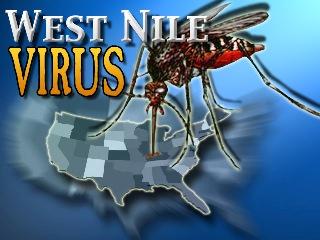
•Mosquitoes become infected when they feed on infected birds. Infected mosquitoes can then transmit West Nile virus to humans and animals while biting to take blood. The virus is located in the mosquito's salivary glands. During blood feeding, the virus may be injected into the animal or human, where it may multiply, possibly causing illness.
Am I likely to get sick if I live in an area where birds or mosquitoes with West Nile virus have been reported?
•No. Even in areas where mosquitoes do carry the virus, very few mosquitoes are infected. Therefore, the chance you will become severely ill from any one mosquito bite is extremely rare.
Have some animals been found to be infected with West Nile virus?
•Although the vast majority of infections have been identified in birds and horses, virus has been detected in asymptomatic cats, bats, dogs, chipmunks, skunks, squirrels, domestic rabbits and raccoons.
Can you get West Nile virus directly from birds or other animals?
•There is no evidence that a person can get the virus from handling live or dead infected birds or other animals. However, persons should avoid barehanded contact when handling any dead animals. Use gloves or double plastic bags to place the carcass in a garbage can. Contact your veterinarian if you have questions about the health of an animal.
Is there a vaccine against West Nile disease?
•Not for humans. However, a vaccine for horses is available through your veterinarian.
What can I do to reduce my risk of becoming infected with West Nile virus?
•Check and repair windows and screens to prevent mosquitoes from entering your home.
•Remove containers that collect standing water such as old tires, cans, bottles, buckets, toys, pool covers, flowerpots, and empty plant containers. Containers such as kiddie pools and birdbaths require a change of water every three to four days to prevent mosquito breeding.
•Avoid mosquito breeding areas during peak periods of activity, which are usually from sunset to sunrise.
•Consider wearing long-sleeved shirts and long pants whenever you are outdoors during these times especially if mosquitoes are present.
•Individuals may use repellents on exposed skin and clothing.
•FOLLOW THE LABEL DIRECTIONS CAREFULLY. Do NOT apply to face.
•NEVER ALLOW CHILDREN TO APPLY REPELLENTS. Parents should avoid applying repellents to the hands of children.
•Repellents should NOT be applied to very young children (less than 3 years old).
Discuss any concerns with your physician.
Still have questions? Helpful telephone numbers
To arrange for a Public Health speaker: : (631) 853-3095
To report a dead bird: (631)-787-2200
To report a stagnant pool of water: (631) 852-4270
Contact your veterinarian for questions about your pets.
Contact your physician if you have medical questions; Other public health medical issues: (631) 853-3055
To report mosquito problems call the Department of Public Works: (631) 852-4270 |